Flora
Working with Nature
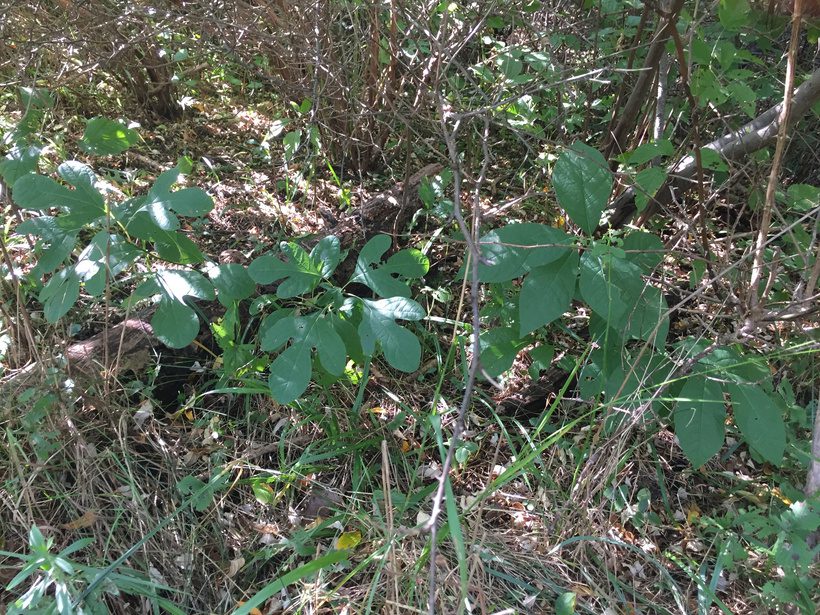
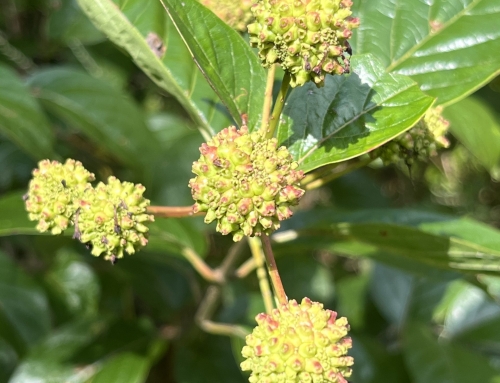
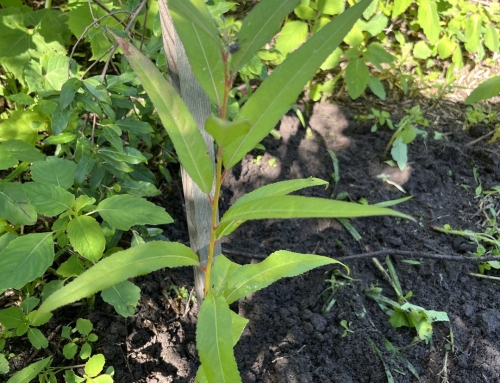
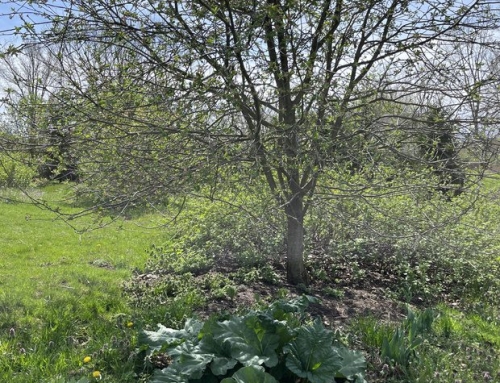
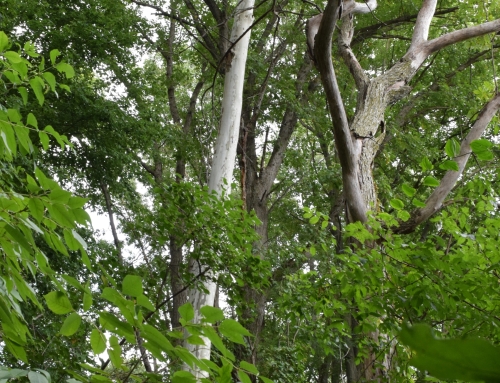
The photo above was taken this summer of some native plants growing under the shade of autumn olive shrubs, which are considered invasive. There are two sassafras trees and some spicebush, both of which are highly valuable for wildlife and humans alike. These native forest plants popped up on their own in this spot, spread by natural processes.
Autumn olives can be problematic when they take over areas that have generally been dominated by native thickets of shrubs such as hazelnuts. (Hazelnuts are rare in the wild today – virtually extinct, as they have been crowded out by industrial agriculture.) However, autumn olives are nitrogen fixers, meaning they fertilize the soil for other plants to grow better. So they are excellent nurse plants. And since ecosystems are always trying to become forests, this means that if we let nature do her thing, she will eventually plant some trees amongst the autumn olives, which will in turn be nursed by them until the trees grow tall, and shade out the autumn olives which will then die back altogether since they don’t live in forest understory areas.
So it is a slow process, but through the natural process of succession, going from a meadow to a forest, the problem can be resolved. And if we wanted, we could select the particular types of trees we wanted to plant amongst the autumn olives to eventually replace them. Many of the autumn olives around the farm and sanctuary are already dying back as trees have begun to shade them too much.
In addition, we can help out the hazelnuts by planting more of them. In my next post, I’ll share about our Skills and Friendship Day this week in which we did some work with hazelnuts, and why hazelnuts are so wonderful.
I hope you can find some time this weekend to spend outside observing and enjoying nature.
Jean
Share this article
Written by : Jean Cavanaugh
Jean Cavanaugh is the founder and steward of Crossing Hedgerows Sanctuary, established in 2019 as a living, learning community devoted to reconnecting people with the wisdom of nature, the sacred order of creation, and the presence of Christ within all life. Her work brings together spiritual formation, ecological stewardship, ancestral wisdom, and hands-on community practice.
Through years of practical work on the land, study of the Mysteries, and the healing of her own severe health challenges through natural methods, Jean has come to recognize God’s hand at work throughout creation. Her teachings, rooted in the Mystery School tradition and Christian gnosis, explore how the patterns of heaven, earth, and the human body reveal the way back to divine presence, peace, and inner strength.
Jean leads with honesty, integrity, and a deeply welcoming spirit, inviting others to let go of inherited assumptions and rediscover truth through lived experience and embodied understanding. She works with all ages—from preschoolers to elders—offering programs and celebrations that emphasize direct engagement with nature, music, story, homesteading skills, and in-person community.
She and her family live at the 21-acre Crossing Hedgerows Sanctuary, where daily life reflects a commitment to simplicity, beauty, and harmony with the land. The sanctuary includes gardens, woodland trails, a seasonal creek, gathering circles, and spaces designed to nourish both people and wildlife. Jean is especially passionate about creating environments that are grounding, beautiful, and spiritually restorative.
Through her writing and teaching, Jean encourages others to know themselves, know creation, and recognize Christ as the living truth present within and around us—always inviting a return to love, beauty, and the sacred order of life.