Flora
The Lowly Sumac

(Sumac Berries by Brennah Cavanaugh Photography LLC)
It’s been awhile since I have posted a native plant profile! All the plants I post about are ones that we have planted or are protecting on our land at Crossing Hedgerows.
Most people are familiar with sumac, but don’t realize how valuable it is. Because so many of our native thicket plants have disappeared to large swaths of farmland, it’s another of the ones that we have encouraged on our land.
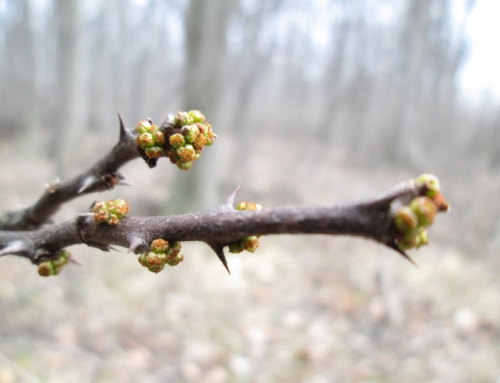
The type of sumac we have is the Staghorn variety. it has furry branches that look like young deer horns.
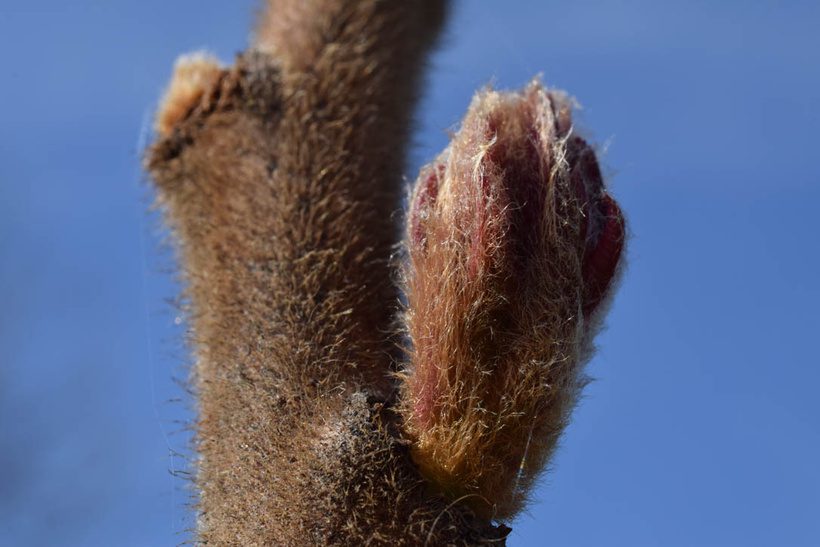
(Sumac branch and bud by Brennah Cavanaugh Photography LLC)
The National Plant Data Center says:
“Sumac serves primarily as a winter emergency food for wildlife. Ring-necked pheasant, bobwhite quail, wild turkey, and about 300 species of songbirds include sumac fruit in their diet. It is also known to be important only in the winter diets of ruffed grouse and the sharp-tailed grouse. Fox squirrels and cottontail rabbits eat sumac bark. White-tail deer like the fruit and stems.”

(Sumac branch in the fall by Brennah Cavanaugh Photography LLC)
Sumac is also quite important for our native pollinators. Having native plants that blossom at different times during the season helps ensure that the pollinators have constant access to food sources. The Indigenous Landscapes Facebook page reported in June of 2022:
“Smooth Sumac (Rhus glabra) was the most popular native plant with pollinators on this late June day. Many species of flies including a bumblebee mimicking fly. Solitary bees and wasps made up most of the other visitors.
Whether you’re considering the early spring blooms of Fragrant Sumac; the mid spring bloom of Staghorn Sumac, the Early Summer bloom of Smooth sumac, or the later summer blooms of Winged Sumac – you cannot go wrong with planting sumac species for pollinator support.”
(Bloom times vary depending on your location.)
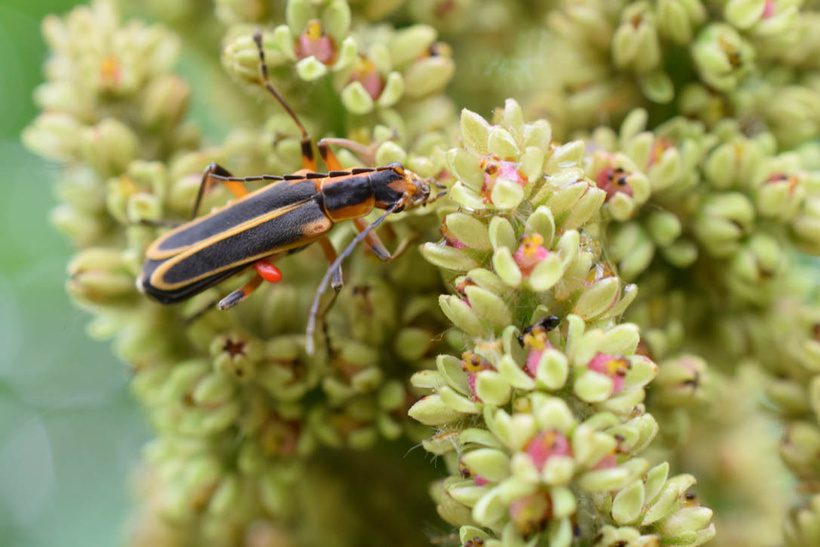
(Margined Leatherwing Beetle on sumac flowers by Brennah Cavanaugh Photography LLC)
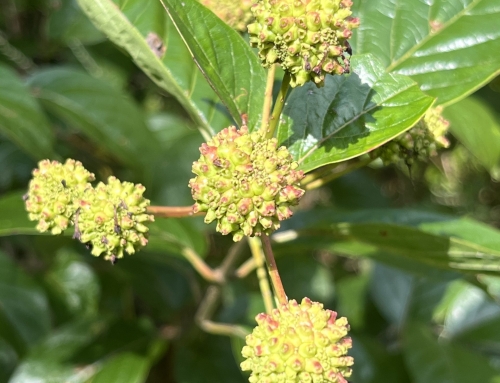
The following photos show the progression of the flowers into berries, thanks to Brennah’s amazing observations and photography.
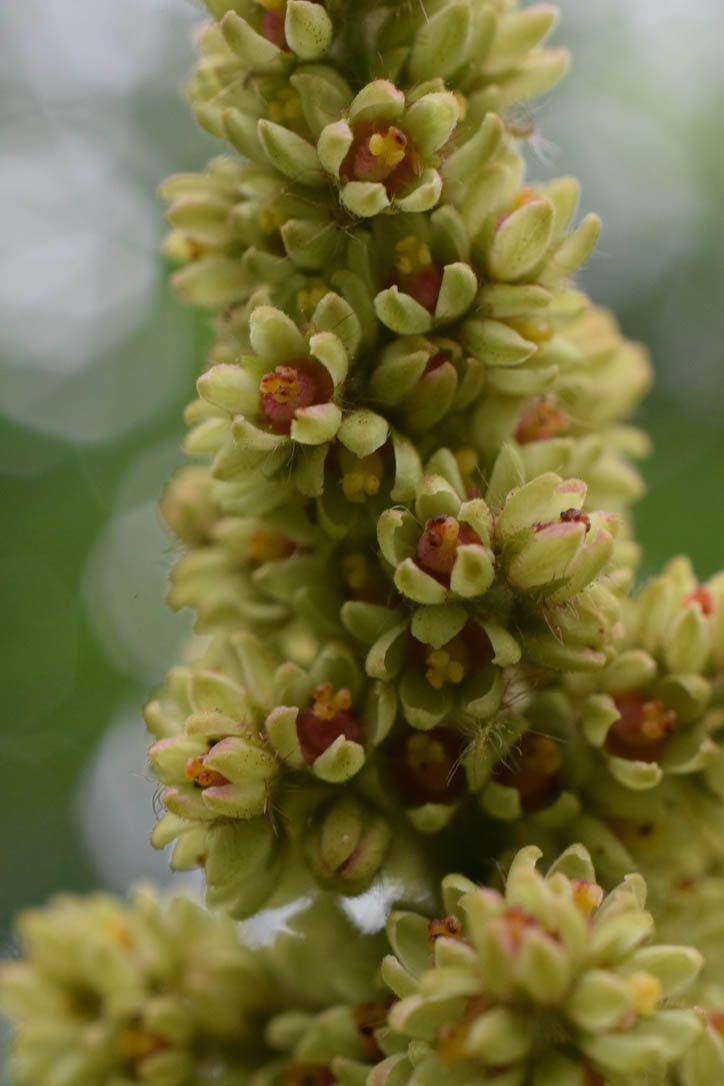
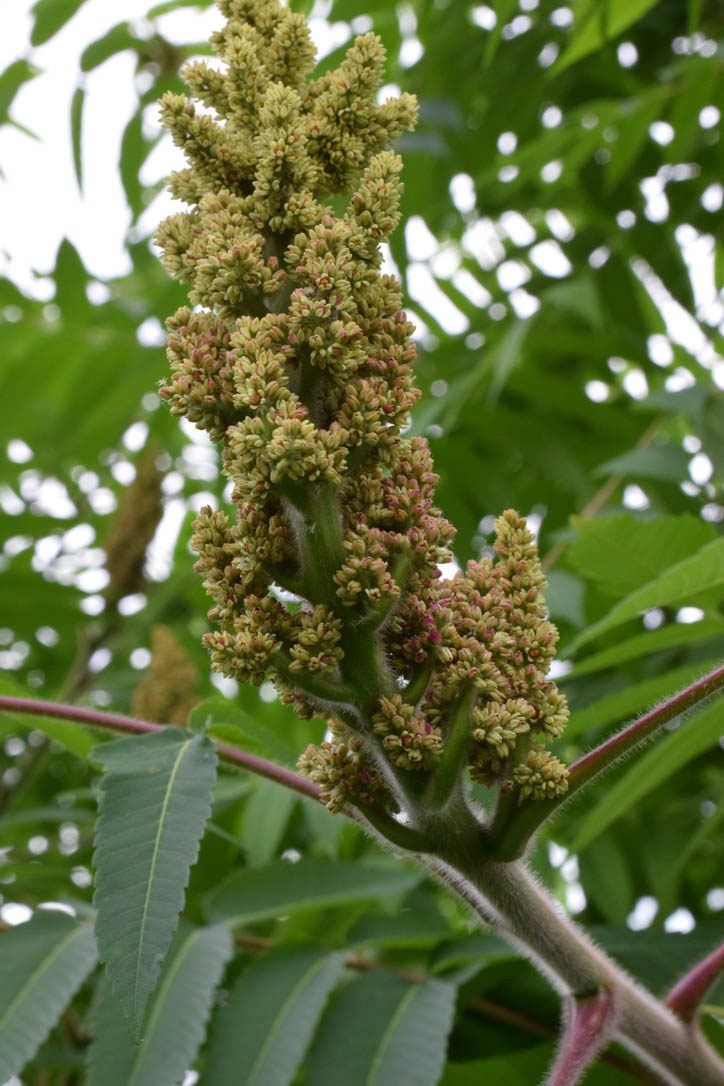
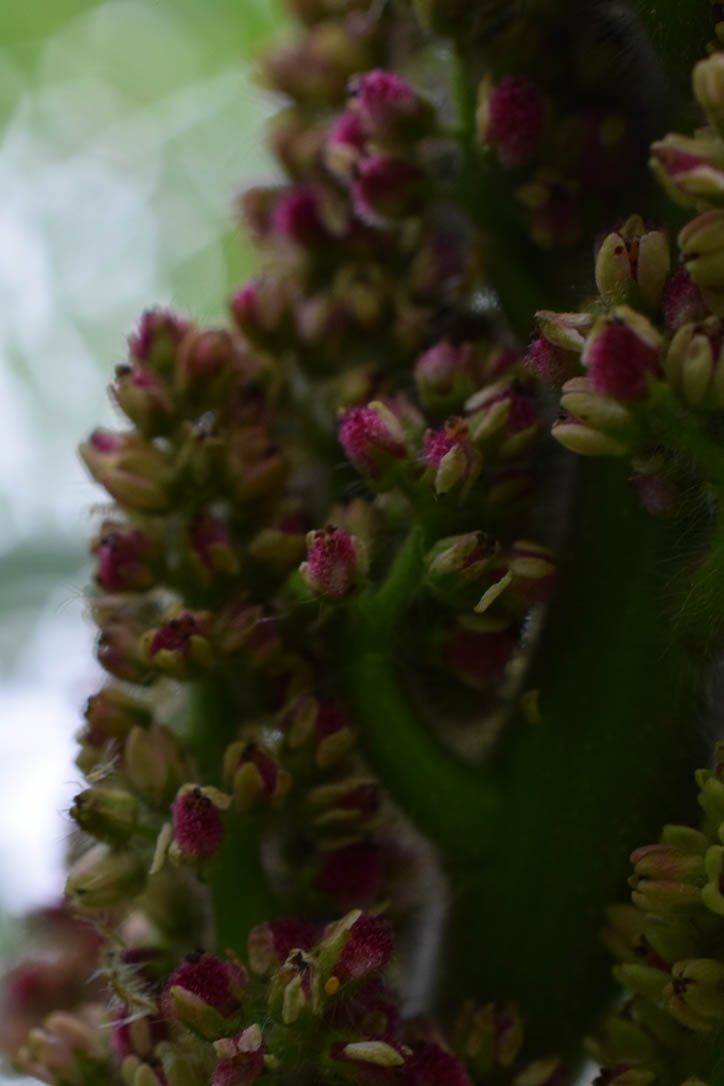
Sumac berries are ground into a wonderful spice often used in Middle Eastern cooking. And a little known use that we have discovered, is that the dried berry heads make the best fuel for bee smokers when calming the honeybees in a hive. It burns at a very low smolder for a long time, creating a lot of smoke.
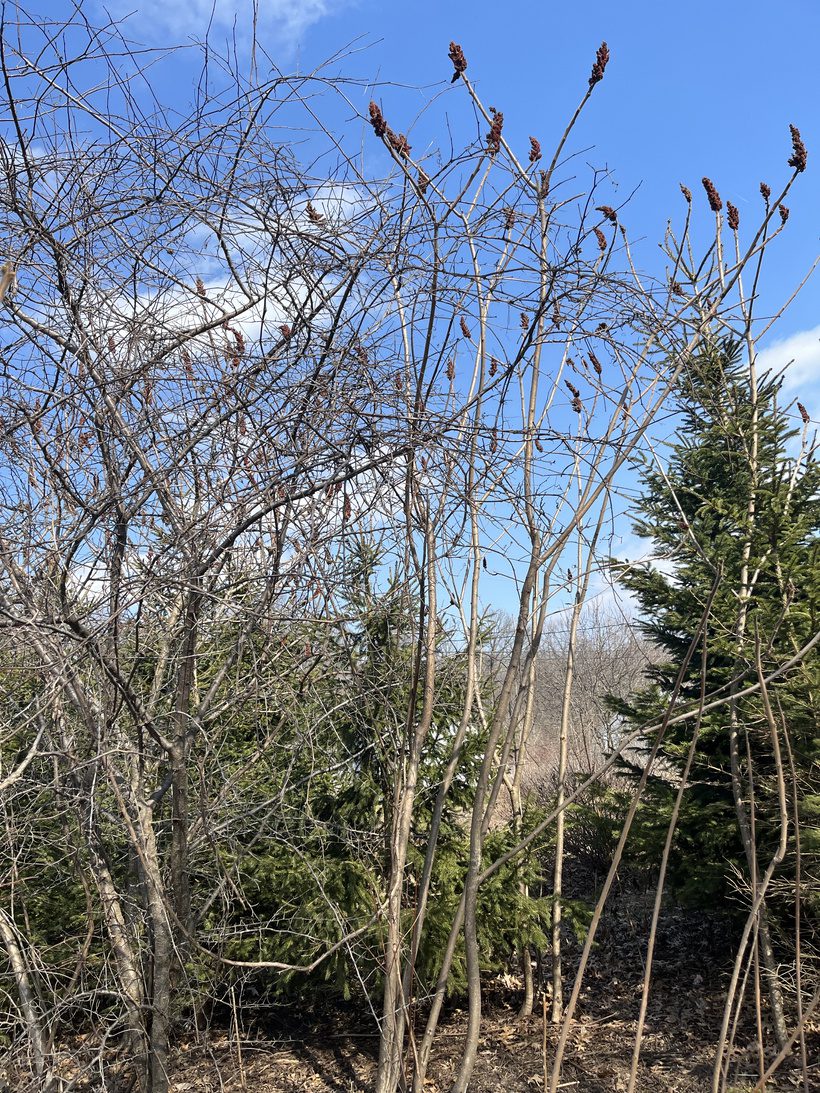
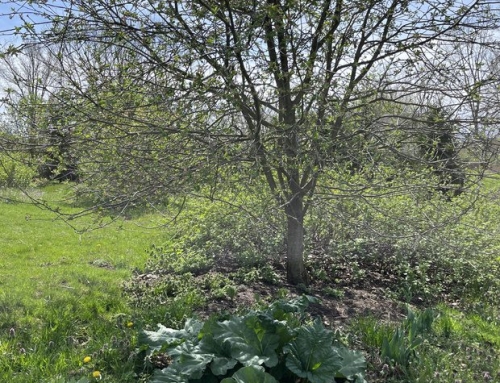
(Photo taken today showing the dried berry heads. Next to the sumac is a native plum bush which I will share about in a coming post!)
I’m looking forward to starting up the Bonfire/Potluck/Nature Walks again soon. 🍄
Peace and Blessings,
Jean
(All photos, except for the last one, are copyright protected embedded in the photos. You can find more of Brennah’s work at brennahcavanaugh.com)
Share this article
Written by : Jean Cavanaugh
Jean Cavanaugh is the founder and steward of Crossing Hedgerows Sanctuary, established in 2019 as a living, learning community devoted to reconnecting people with the wisdom of nature, the sacred order of creation, and the presence of Christ within all life. Her work brings together spiritual formation, ecological stewardship, ancestral wisdom, and hands-on community practice.
Through years of practical work on the land, study of the Mysteries, and the healing of her own severe health challenges through natural methods, Jean has come to recognize God’s hand at work throughout creation. Her teachings, rooted in the Mystery School tradition and Christian gnosis, explore how the patterns of heaven, earth, and the human body reveal the way back to divine presence, peace, and inner strength.
Jean leads with honesty, integrity, and a deeply welcoming spirit, inviting others to let go of inherited assumptions and rediscover truth through lived experience and embodied understanding. She works with all ages—from preschoolers to elders—offering programs and celebrations that emphasize direct engagement with nature, music, story, homesteading skills, and in-person community.
She and her family live at the 21-acre Crossing Hedgerows Sanctuary, where daily life reflects a commitment to simplicity, beauty, and harmony with the land. The sanctuary includes gardens, woodland trails, a seasonal creek, gathering circles, and spaces designed to nourish both people and wildlife. Jean is especially passionate about creating environments that are grounding, beautiful, and spiritually restorative.
Through her writing and teaching, Jean encourages others to know themselves, know creation, and recognize Christ as the living truth present within and around us—always inviting a return to love, beauty, and the sacred order of life.