Musings
What Is a King?
I’ve noticed there has been a lot of uproar about Kings lately. So I thought it might be appropriate to delve into the meaning of true kingship from the perspective of ancient cultures. I’m going to use as an example the kings of ancient Ireland as discussed in The Book of the Great Queen by Morpheus Ravenna. She lays out extensive research from primary sources in her book which you can find referenced there.
Also, having read “The Tain” (translated by Thomas Kinsella), and other such ancient literature and mythologies, I have some understanding of the accuracy of Morpheus Ravenna’s statements in this area.
These sections from The Book of the Great Queen are long but worth quoting in full:
SOVEREIGNTY AND SACRAL KINGSHIP
Kingship in early Ireland cannot be decoupled from religious and spiritual functions. It was understood, at its root, as a contract with the Otherworld. The king represented the combined and balanced aspects of the whole society, encompassing its three functions or estates (martial, priestly, and productive). Standing beyond and embodying all three functions, the sovereign mediated between them and the Otherworldly forces through which prosperity was believed to be obtained.
Kings in early Irish society, as in other ancient Celtic societies, were drawn from the warrior elite and were measured for fitness by their martial capacities. Yet the identity of a king was not solely martial. Accession to kingship involved taking on a new, highly sacralized and liminal status embodying all parts of society. As Bruce Lincoln puts it, speaking of Indo-European societies inclusively, “kings were forced to pass through elaborate coronation ceremonies which had as their chief goal the creation of a new social identity for the future king, not as a warrior but as one who integrated within himself the essence of all three social classes.” The obligations of the sovereign incorporate all three functions: the martial function in providing military force and serving as a war-leader; the priestly function in upholding gessi, observing religious rites and customs, and giving true judgements; and the productive function in feast-giving, generosity and the taking and redistribution of tribute, as well as the crucial function of maintaining the fertility of the land through right relations with the Otherworld.
Above all, the central requirement of kings fuses all three functions: giving true judgements, called fir flathemon, “truth of sovereigns”. This concept encompasses the whole relationship of the king to land, people, and Otherworld, through which prosperity was understood to be secured. As the king was identified bodily with both land and people, failure of right action or personal integrity on the part of the king was believed to manifest itself in the loss of fertility and well-being in land and people: cows would lose their milk, grain would not grow, defeats in battle would occur, and people would suffer famine. These occurrences themselves would be signs that the spiritual force of sovereignty had withdrawn itself from the king because he was no longer worthy of it.
Sovereignty in the Irish paradigm is thus a spiritual force which arises in the Otherworld and is channeled or mediated through the person of the king, and which should flow toward land and people to sustain their well-being. His primary function was the maintenance of that relationship with Otherworldly forces which allowed him to preserve that flow of blessing and sovereignty. That sovereignty itself was conceived of as a fluid force is demonstrated by the many myths in which it is conferred upon the sovereign in the form of a Goddess or Otherworldly woman offering him liquid from a cup or from a well. These Otherworldly females embody the Celtic pattern of identifying divine power with waters, as seen in the many river Goddesses. Rivers and wells rise from the land, just as the force of sovereignty and its blessings are seen to flow from an Otherworld centered beneath the land.

(I would also add that the knowledge of waters above and waters below gives even more significance to this concept.)
In another section of The Book of the Great Queen it talks about what happens if the king does not fulfill his requirements. It is also an excellent consideration as we head into our celebrations of Samhain.
THREE DEATHS OF A KING
In Ireland, the best documented context for sacrifice may be of kings. Sacral kingship seems to have been deeply tied to sacrificial customs. As the king was bodily identified with the land, required to be whole in body and just in his actions to guarantee the well-being of the land, so when that integrity and justice were compromised, his death might be required in order that his body might restore the land.
Deaths of kings are everywhere in Irish literature surrounded with omens and indicators of ritual, and attended by the presence of a sovereignty Goddess, in the form of the mysterious Otherworldly woman or the malevolent cursing hag, depending on the king’s status relative to fir flathemon, kingly justice, at his death. This sovereignty figure is sometimes a form of the Morrígan herself, particularly in the case of kings who have fallen into violation of fir flathemon and their attendant gessi – such as Conaire Mór, met by the Badb in Dá Derga’s Hostel mentioned above.
Conaire’s death exemplifies another persistent theme in the sacrificial deaths of kings: the triple death. A fatal druidic thirst afflicts Conaire, he is slain by sword, and he is a victim of a burnt house (and so at least by proxy suffers death by burning). His death also takes place at the charged time of Samhain, and is surrounded by tripling of numerous other omens (the appearance of the triple Badb, the three doomed and sacrificed Red Riders, the three burnings of the house, etc.). Another example concerns a king Muirchertach mac Erca, a descendant of Niall of the Nine Hostages, who dies a triple death on Samhain night as well – burned, wounded, and finally drowned in a vat of wine. His death is attended by a mysterious and ominous Otherworldly woman named Sín, who shares some of her epithets with the hag Caib, who is also the Badb.
That this triple death is not simply mythological is amply demonstrated by the archaeological record. Bodies have been recovered from bog and marsh sites in Ireland as elsewhere in Europe showing clear evidence of ritual killing, including tripled forms of death and “overkilling”. The celebrated British Lindow body exemplifies this pattern: he was garroted, his throat cut, and hit by a blunt killing blow to the back of the head. Irish bog bodies such as Clonycavan and Oldcroghan also instantiate the pattern, both hung or strangled along with cutting of the nipples and dismemberment or other forms of violence. The high status of these ritually killed men is shown by features such as valuable arm-rings, expensive imported hair resins and manicured condition of the nails.
Ritual king sacrifice can be viewed as a specific form of devotional sacrifice. As the role of the sacral king is marriage to the Goddess of sovereignty, it is through her benevolence and the attendant spiritual backing of the Otherworld that the prosperity of his reign is achieved. The king’s responsibility in this sacral contract is to effect fir flathemon, truth of sovereigns, and so ensure the continued benevolence of the Goddess and the Otherworld powers. Historically, these king sacrifices may have sometimes occurred at times of famine or hardship, conditions that would point to the king failing in his role as sovereign and consort, breaking the Otherworldly contract, as manifest in the loss of the land’s prosperity. Thus his reign would be ended and his life offered as a sacrifice to appease the Otherworldly powers in hope of restoring the land.
For those of you versed in alchemy, the alchemical wedding represented by the Goddess figure, as well as the purification through fire and other means is highly evident in this description. The king was to be one who had attained enlightenment and to rule justly, and if he became corrupted he was to be sent away to his next life to try again.
These alchemical elements of enlightenment are also found in the stories of other kings such as Arthur, and Lord Jesus Christ. I invite you to listen to the song No King* for a different perspective than the one you’ve likely been hearing lately. It corresponds with the ancient concept of kingship where natural law rather than the laws of men reign supreme that we might all live according to what we know to be good and right.
*Song starts at 17:47, or you can click on it in the comment pinned below it.
Many blessings to you all, and I look forward to seeing some of you at our Samhain celebration! Saturday 11/1 at 11 am! (I will also post another official invitation here soon.) Please let me know if you plan on attending. We may or may not be including a ritual sacrifice. 😅
Seriously though, there will be a ceremony, potluck and bonfire. And it will be family friendly. You know the drill!
Jean
Share this article
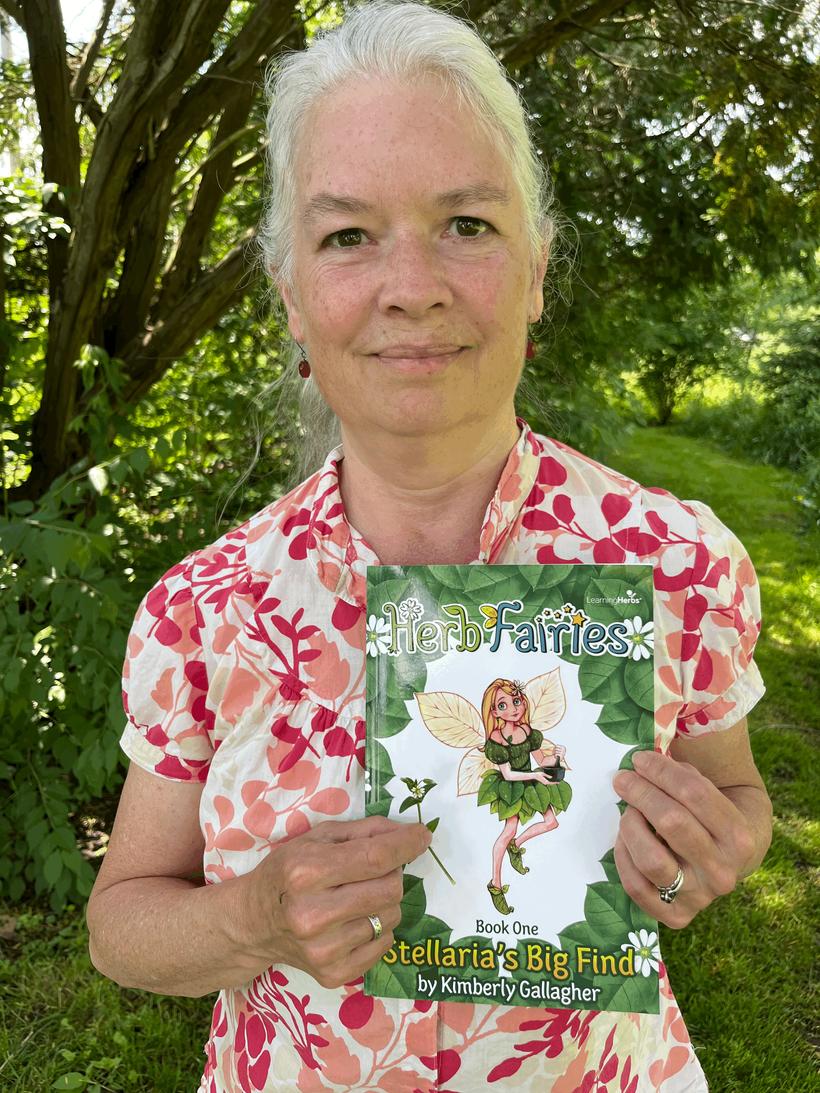
Written by : Jean Cavanaugh
Jean Cavanaugh is the founder and steward of Crossing Hedgerows Sanctuary, established in 2019 as a living, learning community devoted to reconnecting people with the wisdom of nature, the sacred order of creation, and the presence of Christ within all life. Her work brings together spiritual formation, ecological stewardship, ancestral wisdom, and hands-on community practice.
Through years of practical work on the land, study of the Mysteries, and the healing of her own severe health challenges through natural methods, Jean has come to recognize God’s hand at work throughout creation. Her teachings, rooted in the Mystery School tradition and Christian gnosis, explore how the patterns of heaven, earth, and the human body reveal the way back to divine presence, peace, and inner strength.
Jean leads with honesty, integrity, and a deeply welcoming spirit, inviting others to let go of inherited assumptions and rediscover truth through lived experience and embodied understanding. She works with all ages—from preschoolers to elders—offering programs and celebrations that emphasize direct engagement with nature, music, story, homesteading skills, and in-person community.
She and her family live at the 21-acre Crossing Hedgerows Sanctuary, where daily life reflects a commitment to simplicity, beauty, and harmony with the land. The sanctuary includes gardens, woodland trails, a seasonal creek, gathering circles, and spaces designed to nourish both people and wildlife. Jean is especially passionate about creating environments that are grounding, beautiful, and spiritually restorative.
Through her writing and teaching, Jean encourages others to know themselves, know creation, and recognize Christ as the living truth present within and around us—always inviting a return to love, beauty, and the sacred order of life.