Flora
Plant Spotlight – Native Wild Plums
By Jean Cavanaugh

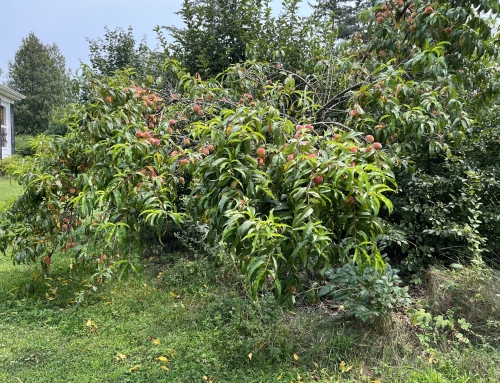
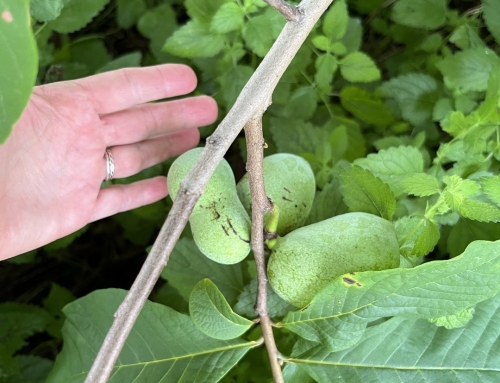
(A Wild Plum from this past August)
Another of the native shrubs we have planted at Crossing Hedgerows is the Wild Plum. At one time, native plums were one of the most established wild food crops of Native Americans. According to the book, Native Plant Agriculture, by Indigenous Plants, Native Plums are more energy dense than any domesticated fruit you’d find in the grocery store and is only rivaled by other wild fruits such as serviceberries, pawpaws, and the common persimmon. Many of you may know that we are also growing serviceberries and pawpaws at Crossing Hedgerows!
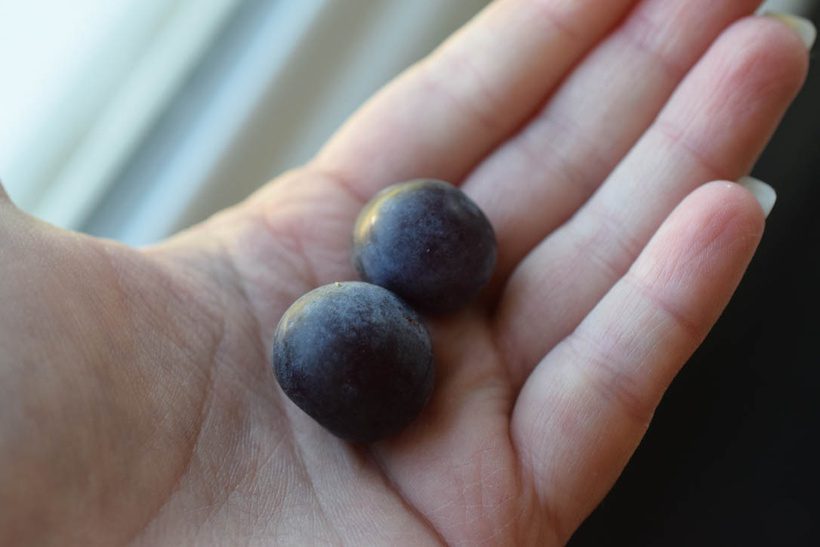
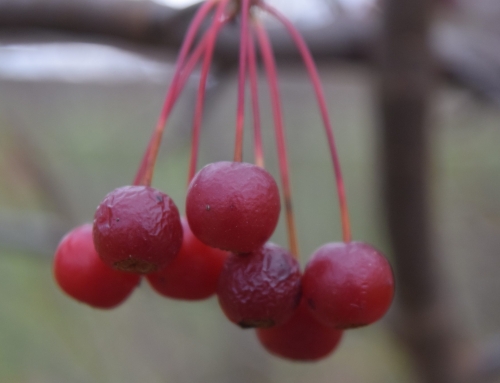
(This shows the size of the wild plums.)
Native Plums are a thicket species that were once abundant in areas that were kept open by the regular use of fire. They grew in prairies mixed with Hazelnuts, Wafer Ash, Sweet Crabapples, Hawthorn, and other thicket species. Here at Crossing Hedgerows, we are growing varieties of some of these other types of plants as well. Many of them we planted, such as the plums, hazelnuts, and hawthorn. And the others were planted by birds and other natural means.
These native thicket species are disappearing across the landscape. Today native plums are becoming extinct as more and more land is taken up by industrial agriculture and subdivisions. And most states have also lost their primary seed disperser – the Black Bear.
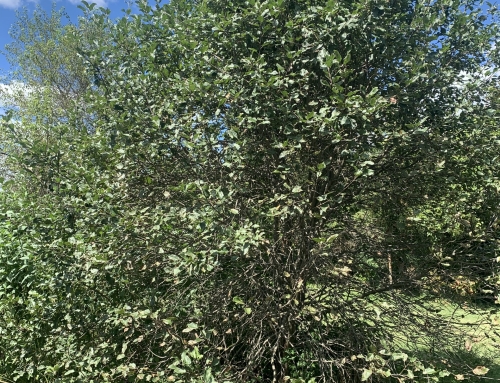
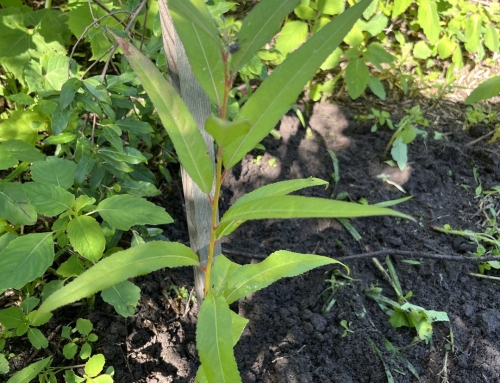
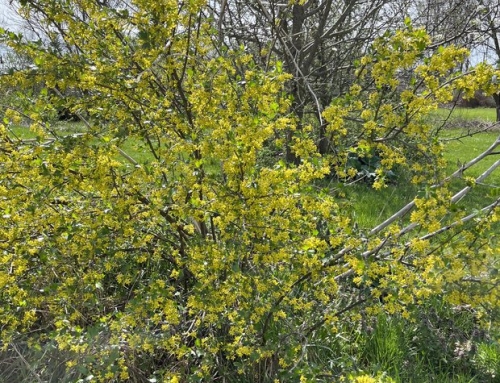
Here at Crossing Hedgerows, we are excited to see our native plums really beginning to take off. Following is a picture of one of them (in the foreground) that I took today.
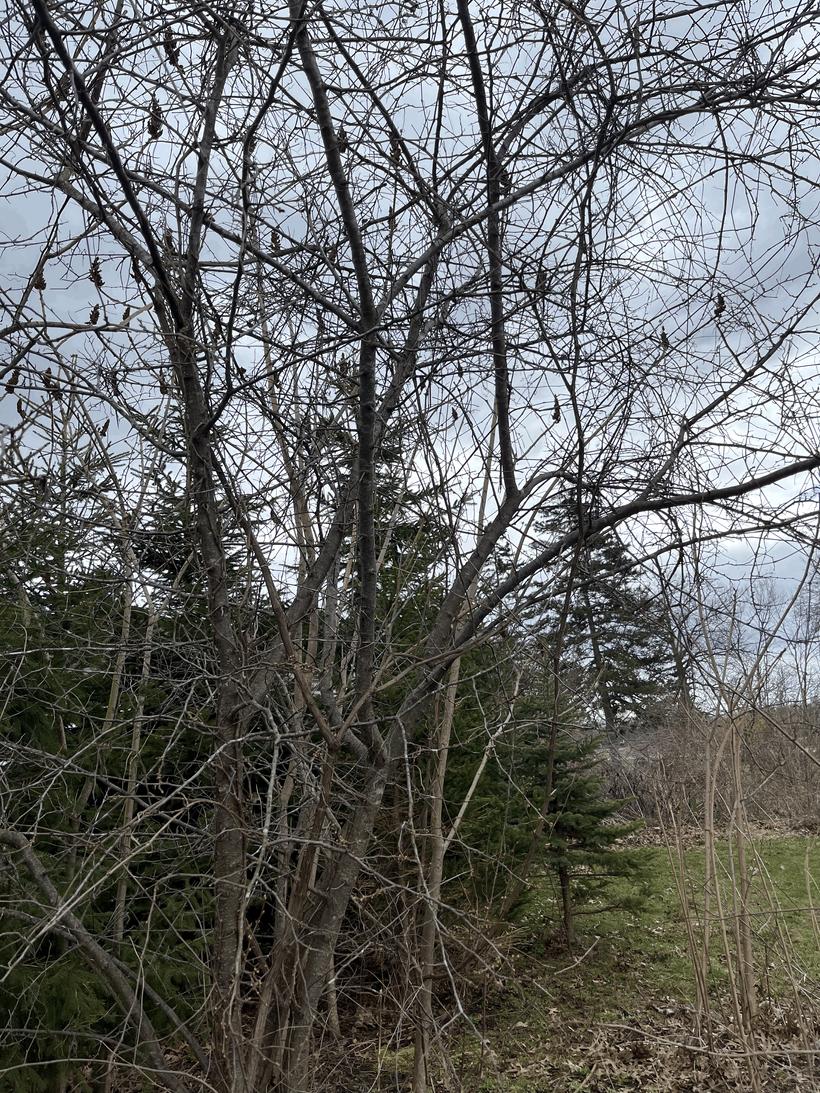
(Native Plum thicket – foreground)
Wild plums spread by suckers, so as it continues to produce these suckers, we will be able to split them off and plant them in other spots on the land.
And of course, they are highly valuable to our pollinators and wildlife!
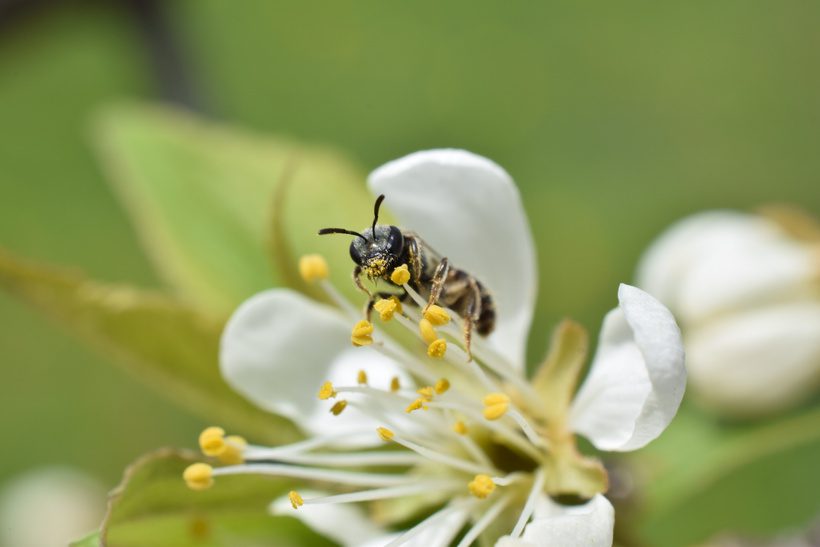
(Native Bee on Wild Plum Blossom feeding on pollen at Crossing Hedgerows – by Brennah Cavanaugh Photography LLC – copyright protected)
“Outside of native bees, native plums are potential hosts for hundreds of native caterpillars and other insects which will help transfer energy up the food chain.”
– Indigenous Landscapes
A wide variety of wildlife, from amphibians to mammals and birds, take shelter and find sustenance within the native thickets.
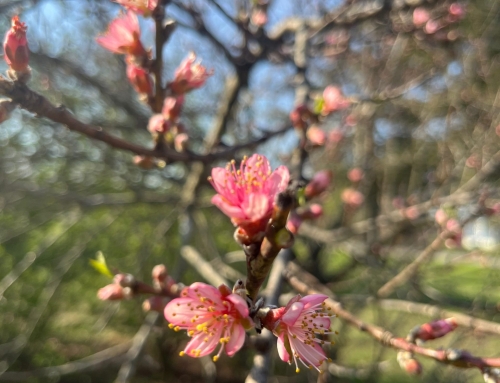
As spring returns, we will soon be seeing (and smelling!) the beautiful blossoms… and then the fruit again this year!
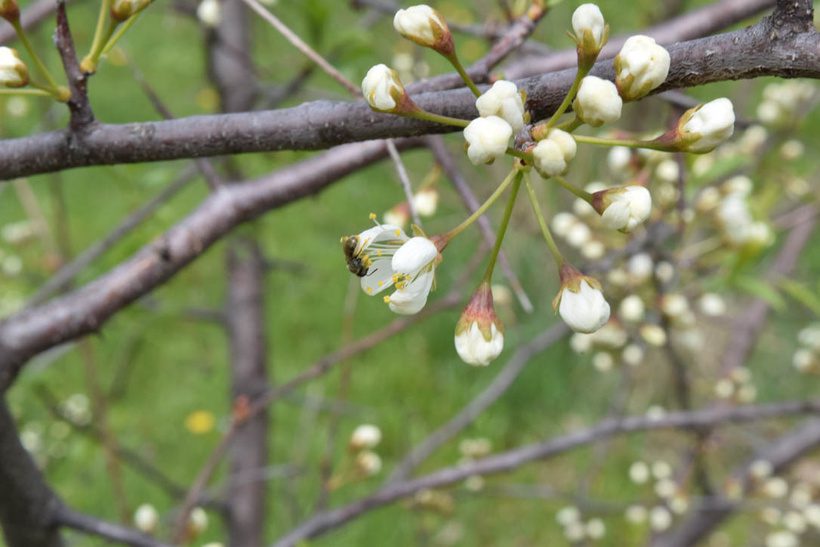
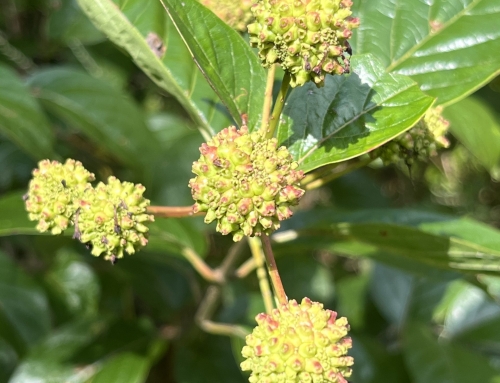
(Native Plum thicket – Photo by Brennah Cavanaugh Photography LLC)
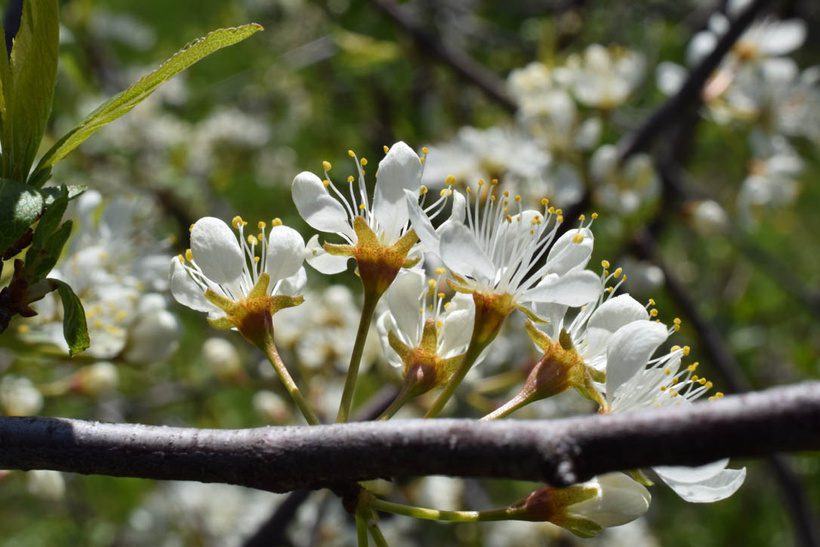
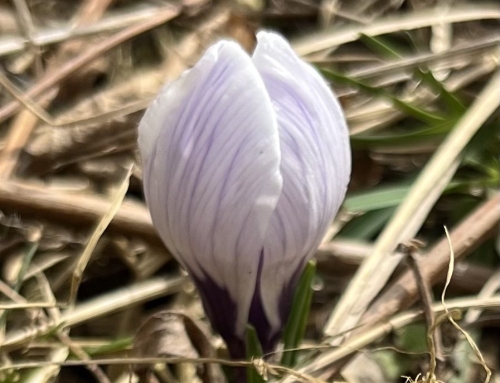
(Native Plum Blossom – Photo by Brennah Cavanaugh Photography LLC)
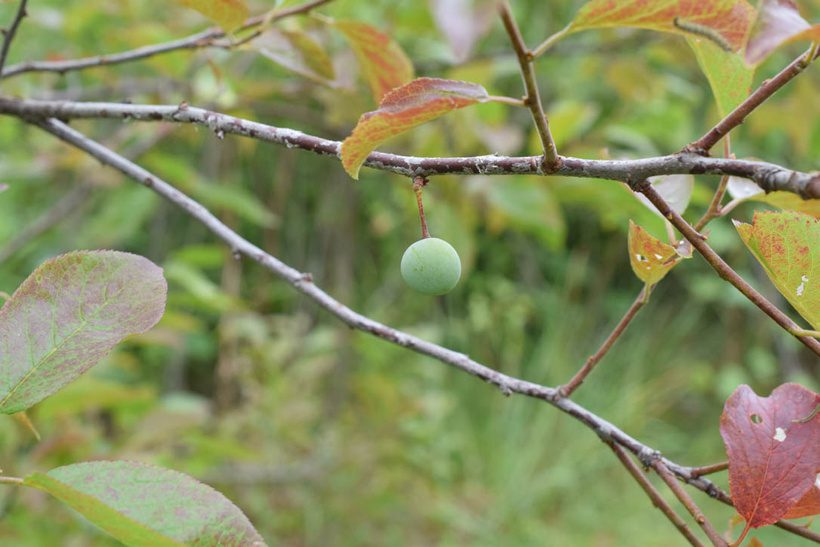
(Unripe developing plum – Photo by Brennah Cavanaugh Photography LLC)
Share this article
Written by : Jean Cavanaugh
Jean Cavanaugh is the founder and steward of Crossing Hedgerows Sanctuary, established in 2019 as a living, learning community devoted to reconnecting people with the wisdom of nature, the sacred order of creation, and the presence of Christ within all life. Her work brings together spiritual formation, ecological stewardship, ancestral wisdom, and hands-on community practice.
Through years of practical work on the land, study of the Mysteries, and the healing of her own severe health challenges through natural methods, Jean has come to recognize God’s hand at work throughout creation. Her teachings, rooted in the Mystery School tradition and Christian gnosis, explore how the patterns of heaven, earth, and the human body reveal the way back to divine presence, peace, and inner strength.
Jean leads with honesty, integrity, and a deeply welcoming spirit, inviting others to let go of inherited assumptions and rediscover truth through lived experience and embodied understanding. She works with all ages—from preschoolers to elders—offering programs and celebrations that emphasize direct engagement with nature, music, story, homesteading skills, and in-person community.
She and her family live at the 21-acre Crossing Hedgerows Sanctuary, where daily life reflects a commitment to simplicity, beauty, and harmony with the land. The sanctuary includes gardens, woodland trails, a seasonal creek, gathering circles, and spaces designed to nourish both people and wildlife. Jean is especially passionate about creating environments that are grounding, beautiful, and spiritually restorative.
Through her writing and teaching, Jean encourages others to know themselves, know creation, and recognize Christ as the living truth present within and around us—always inviting a return to love, beauty, and the sacred order of life.