Fauna, Flora
Native Plant Spotlight: Prickly Ash
While we were pulling out some trash (old tires and such, left by the previous residents) from the woods on our work day this week, there was a particular plant whose thorns wanted to grab at us as we passed by it. This is one of the reasons why we have trails, because these shrubs can make it nearly impossible to pass through certain areas. However, they are another of our beloved native plants that grow in our botanical sanctuary.
They are the prickly ash, which after the prior description, some may wonder what the heck is so great about them?
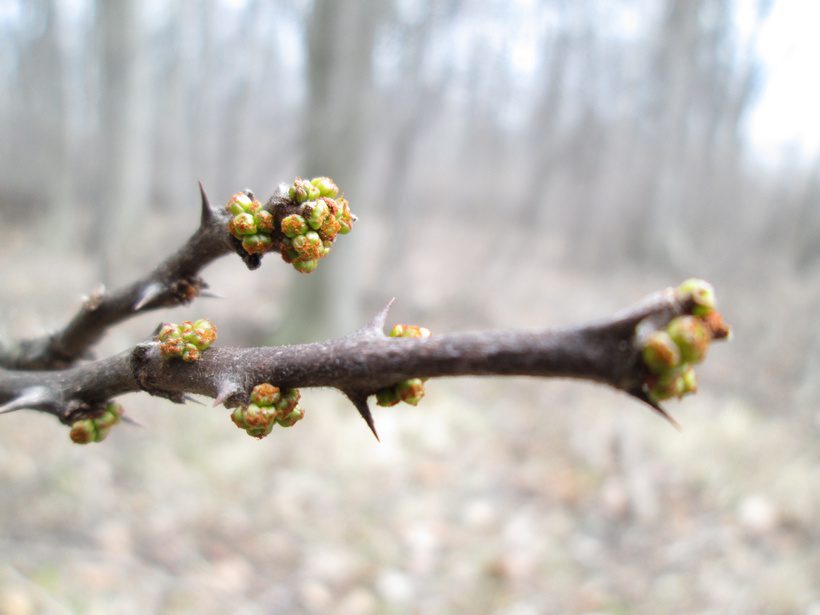
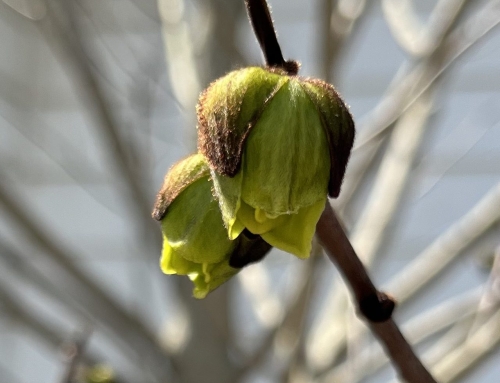
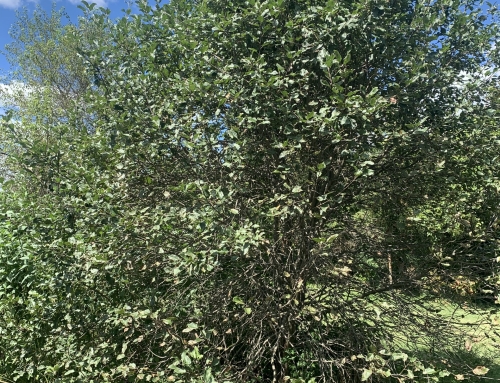
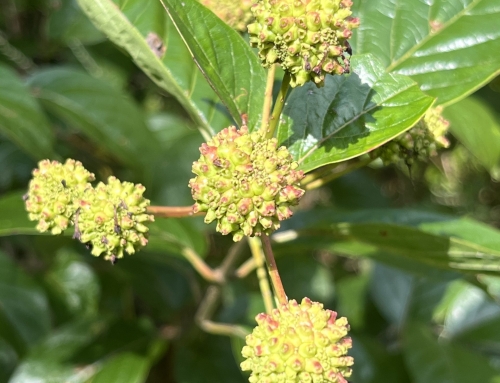
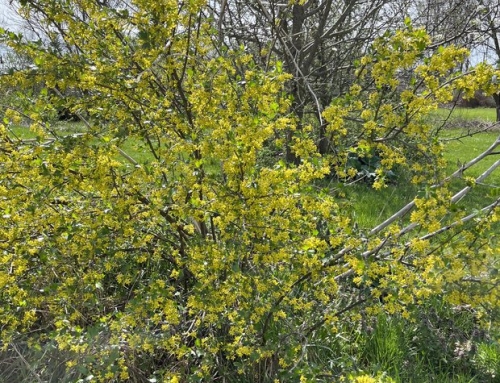
This is what they currently look like. (Photo by Brennah Cavanaugh Photography LLC)
Interestingly, they are one of the northern most members of the citrus family. As such, they are one of the few plants that are a host for Giant Swallowtail butterflies. In essence, they are similar to milkweed for the Monarch butterflies.
I also found this list of the many beneficial insects, birds, and small mammals who benefit from the prickly ash:
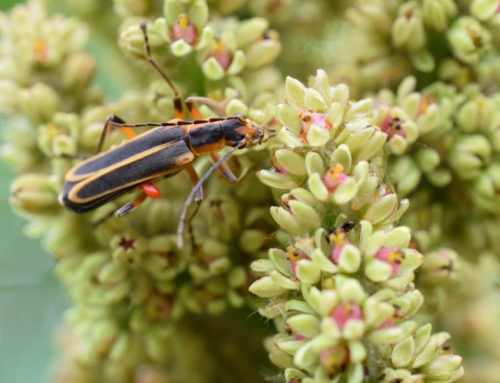
“Faunal Associations: The nectar and pollen of the flowers attract primarily bees and flies (Robertson, 1929). Bee visitors include honeybees, bumblebees, cuckoo bees (Nomada spp.), mason bees (Osmia spp.), Halictid bees (Augochloropsis spp., Lasioglossum spp., etc.), and Andrenid bees (Andrena spp.). Fly visitors consist of Syrphid flies, Tachinid flies, Muscid flies, and others. The caterpillars of the butterfly, Papilio cresphontes (Giant Swallowtail), feed on the foliage of Prickly Ash. This shrub is the preferred host of the leafhopper Empoasca latarca (Dmitriev & Dietrich, 2010). Several polyphagous treehoppers also feed on this shrub: Cyrtolobus vau, Entylia bactriana, Hadrophyllus borealis, Stictocephala albescens, and Stictocephala taurina (Dennis, 1952). The fruits are sparingly consumed by birds and small mammals, including the Bobwhite Quail, Red-Eyed Vireo, and Eastern Chipmunk (Kurz, 1997/2004). These animals help to spread the seeds to new locations.” – From Illinoiswildflowers.info
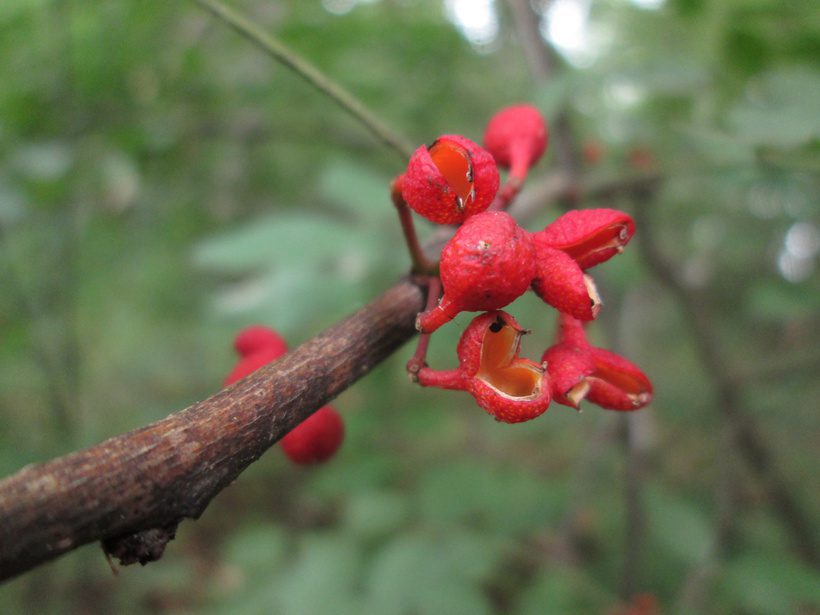
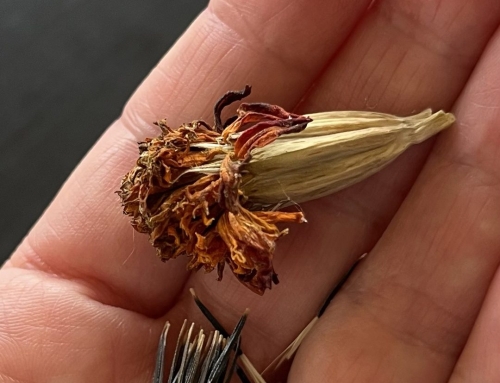
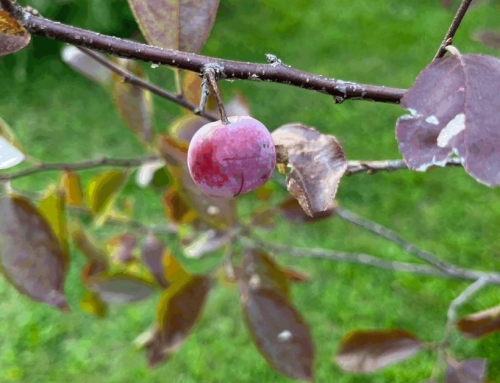
The seed pods are this lovely bright red. The berries inside them are black, but we never see them as they are eaten up right away by the critters. (Photo by Brennah Cavanaugh Photography LLC)
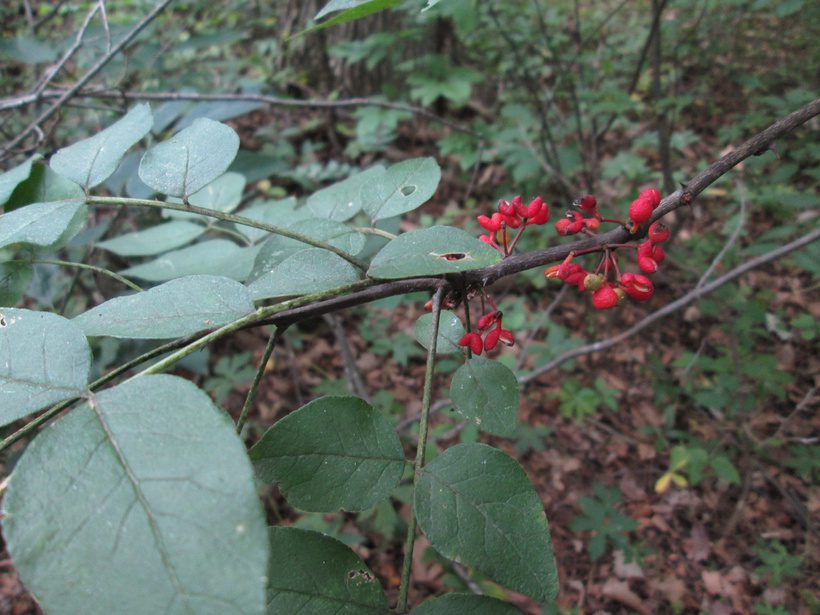
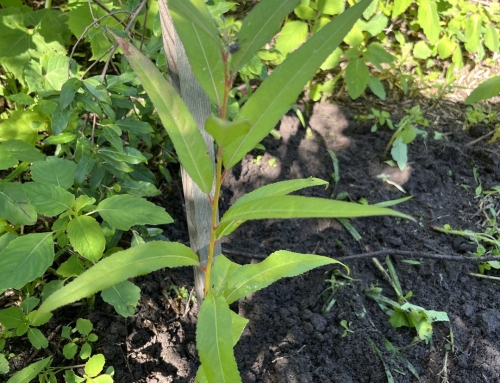
The leaves are similar to an ash tree, but they are not related. (Photo by Brennah Cavanaugh Photography LLC)
Prickly ash also is another of our wild medicinal plants at the sanctuary, with various uses in that realm.
We are grateful that prickly ash has chosen to grace us with their presence and all their wonderful services.
With love from the forest,
Jean
Share this article
Written by : Jean Cavanaugh
Jean Cavanaugh is the founder and steward of Crossing Hedgerows Sanctuary, established in 2019 as a living, learning community devoted to reconnecting people with the wisdom of nature, the sacred order of creation, and the presence of Christ within all life. Her work brings together spiritual formation, ecological stewardship, ancestral wisdom, and hands-on community practice.
Through years of practical work on the land, study of the Mysteries, and the healing of her own severe health challenges through natural methods, Jean has come to recognize God’s hand at work throughout creation. Her teachings, rooted in the Mystery School tradition and Christian gnosis, explore how the patterns of heaven, earth, and the human body reveal the way back to divine presence, peace, and inner strength.
Jean leads with honesty, integrity, and a deeply welcoming spirit, inviting others to let go of inherited assumptions and rediscover truth through lived experience and embodied understanding. She works with all ages—from preschoolers to elders—offering programs and celebrations that emphasize direct engagement with nature, music, story, homesteading skills, and in-person community.
She and her family live at the 21-acre Crossing Hedgerows Sanctuary, where daily life reflects a commitment to simplicity, beauty, and harmony with the land. The sanctuary includes gardens, woodland trails, a seasonal creek, gathering circles, and spaces designed to nourish both people and wildlife. Jean is especially passionate about creating environments that are grounding, beautiful, and spiritually restorative.
Through her writing and teaching, Jean encourages others to know themselves, know creation, and recognize Christ as the living truth present within and around us—always inviting a return to love, beauty, and the sacred order of life.