News
Intro to CHS & Permaculture Presentation
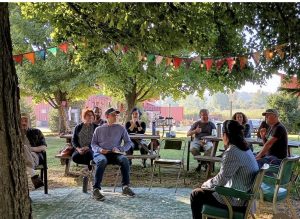
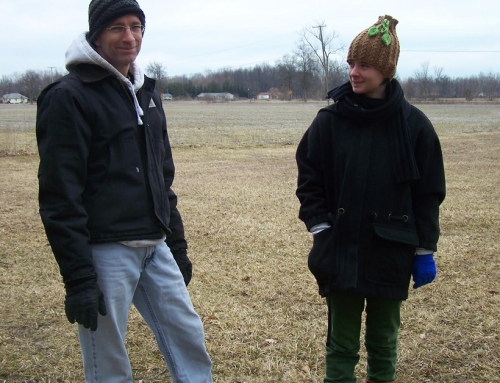
Some of the permaculture presentation attendees at Gateway Farm
I had a fantastic time presenting at Gateway Farm this past Sunday and though it was not recorded, I wanted to share a transcript of my presentation here with you all! But before I do, something to understand about permaculture is that it is a design system based on observation and pattern recognition within nature. This is also the basis of the Mystery School tradition and Gnosticism.
Everything I share and teach about is connected, thus sparking the name for my talk:
It’s All Connected
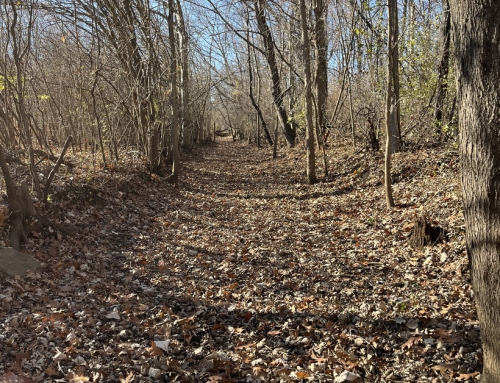
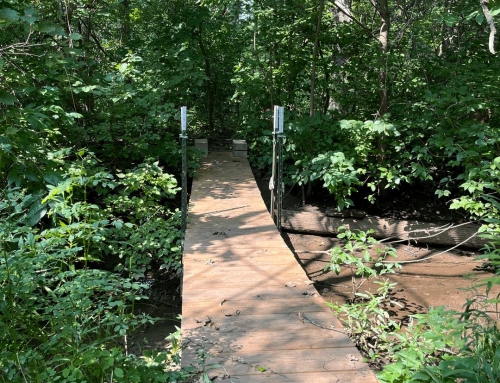
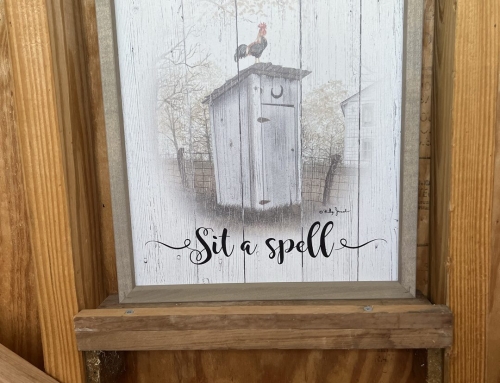
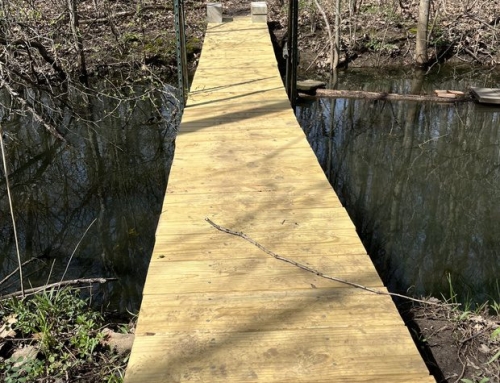
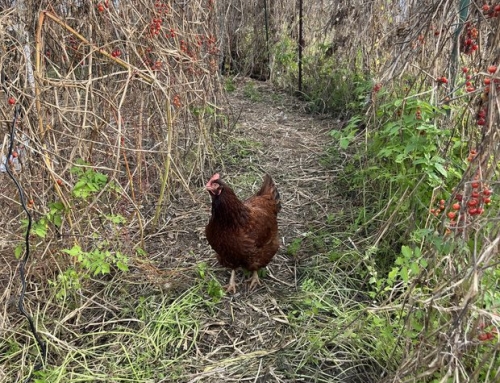
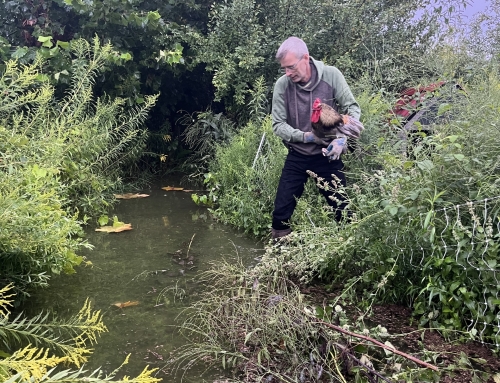
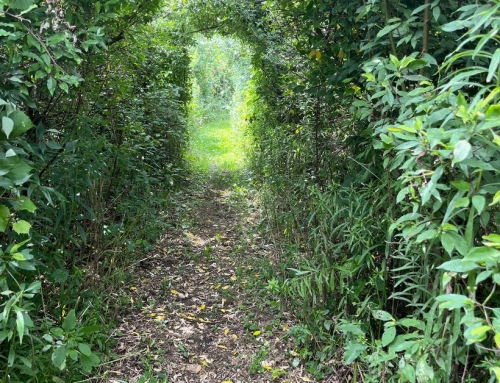
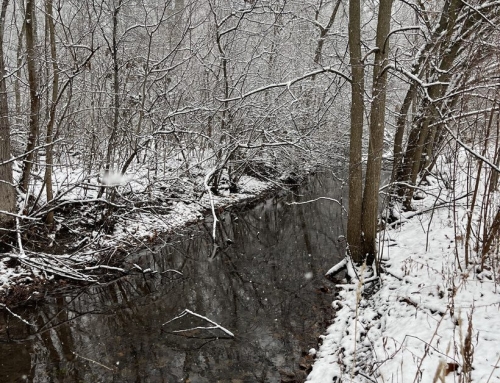
Crossing Hedgerows Sanctuary is a 21 acre homestead with woodlands, a creek, a food forest, a few chickens and many wild plants for foraging. We have beautiful trails throughout the property that allow people to experience it’s beauty. We also have a composting outhouse that many people find really quite charming.
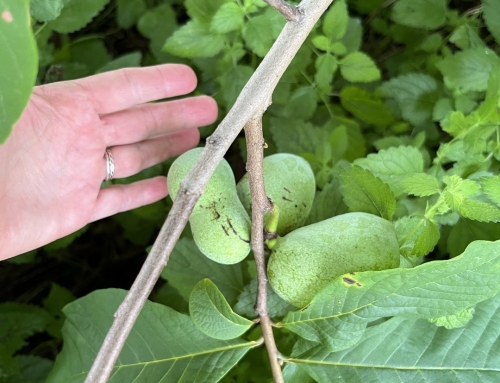
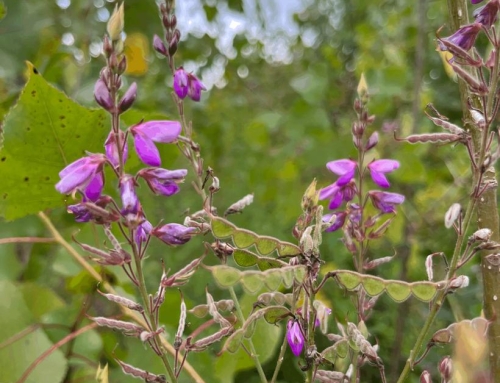
Much of what we have focused on in our plantings is native plant agriculture. These include plants such as, native plums, elderberries, pawpaws, black raspberries, cutleaf coneflowers, sunchokes, a variety of oaks and hickories, hazelnuts, common milkweed, evening primrose, linden or basswood trees, and persimmons. Even the tomatoes we grow are a variety of wild tomatoes that replant themselves every year in our hoophouse.
Solomon Gamboa of Indigenous Landscapes says…
“Native Plant Agriculture is the implementing of edible native plants and native animals as the basis of a primarily perennial agricultural system while mimicking native plant communities in format.”
In other words, it’s basically the permaculture approach but focusing mainly on native plants.
This is not to say we have ONLY native plants, because other varieties can be useful as well. But we enjoy bringing in and nurturing many of the native plants (some of which have arrived on their own) in the interest of rewilding our ecosystem, as well as the ease of growing them. These are the plants that want to be there, so we are not fighting nature when we bring them in. Rather we are working with the natural habitat, allowing it to flourish with the life that is adapted to being there.
(Please feel free to look through the Native Plant Agriculture book that I brought along to see some of the many possibilities for our area.)
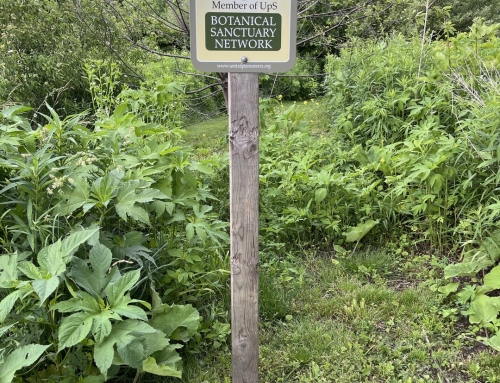
We are also part of the United Plant Savers botanical sanctuary network. We have within our woodland and property a variety of at-risk medicinal plants, such as trilliums, mayapples, slippery elm, echinacea, wild black cherry, wild yam, and Solomon’s seal.
Besides these at risk medicinal plants, many of our other native plant agriculture varieties are rare or endangered, because of clearing for conventional agriculture and housing or urban development. So we love being able to support these species and highlight them in our programs regarding how they can be used, and how they are bringing so much thriving wildlife to our land.
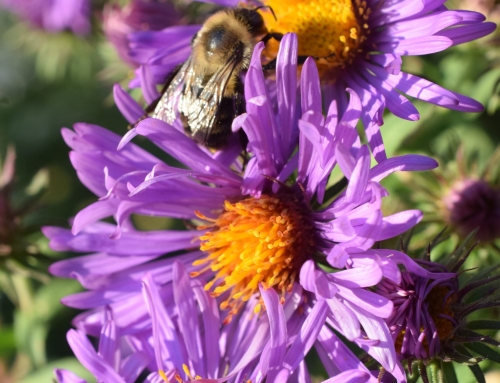
Since we started our project about 11 years ago, we have seen an explosion of all different kinds of songbirds and other types of birds. The variety of insects such as native bees, butterflies, and other types of pollinators and beneficial insects has become robust, as well as all kinds of frogs, toads, and yes, even snakes. Other wildlife like muskrats, weasels, mink, woodchucks, coyotes, turkeys, deer, opossums, raccoons, rabbits, squirrels, chipmunks, and even foxes have been spotted regularly.
In short, it has become a much more balanced ecosystem thus helping to keep pests and problems in check.
Our Programs
We are not focused on selling produce, but rather on building a community that is interested in living closer to nature in all regards. We believe there is a spirit that runs through all things, connecting us all to each other, and that when we tap in to this spirit it gives us the inspiration to treat ourselves, each other and our surroundings in a sacred manner. So along with permaculture practices, I also teach the Mysteries as are found in the ancient mystery school traditions all over the world throughout time, including the Gnostic Christian Mystery tradition.
Do you consider your body and spirit a natural system mirroring the world around you? As you picture sunshine, fresh air, and pure water nourishing and stabilizing the land, can you see it doing the same for you? This is how we tap into holistic living… by understanding that our bodies are not ever broken. Every time you have a symptom, it is your body giving you a clue about something that needs to change, whether that be mentally, physically, or spiritually. So these are all things that we take steps together in community to bring into focus and work on together. Ultimately, it’s about remembering who you are and why you are here in this realm.
Lately I’ve been focusing a lot on children’s programs. Sometimes it requires us to become like little children and see the world anew to make astute observations and see the truth of a situation. So if you would like to reach inside and tap into your inner child, I will share one of my lessons with you.
We always begin our Mystery School meetups with an opening circle. We go over our agreements together, and then each person says something they are thankful for. Then we sing a song called The Doxology.
The word doxology literally means “a study in praise”. Remember how we talked about the spirit that runs through all things? This also means “as above so below.” That is what this song is about. And the trinity of the Father, Son, and Holy Ghost is referring to time… as in Future, Present, and Past …also meaning the Creator, Preserver, and Destroyer. All of nature is subject to this cycle of time, death and rebirth as found in the trinity. When we study nature, we learn the truth of what the mystics have always been telling us. If we connect the dots of the patterns we are seeing, we will see God flowing through everything.
Praise God from whom all blessings flow;
Praise Him all creatures here below;
Praise Him above ye heavenly hosts;
Praise Father, Son, and Holy Ghost. Amen.
Now, for this lesson, we will start with a story. It’s called Eleanor the Elephant by Felix Freedman. It was illustrated by his son, Murdock Freedman.
Next picture yourself going and harvesting some food together at the sanctuary and having a snack made from the food. Before eating your food, we will say The Druid Prayer for Peace together. It goes like this. (Repeat each line after me.)
“Deep within the still center of my being may I find peace.
Silently within the quiet of the grove may I share peace.
Gently within the greater circle of humankind may I radiate peace.”
After our snack we will play a game. This is a game that helps us learn how to slow down and observe nature. (Hand out Nature Bingo sheets.) Take a little walk and see if you can find enough items to make a Bingo on your paper. (Some of the items on the sheet include: something smooth, a bendy stick, something prickly, something wet, something dead, a long skinny leaf, a feather… etc.)
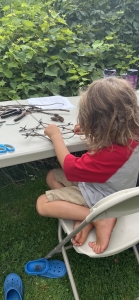
And now imagine yourself settling in for a craft to make some corn dollies. We make the dollies from the corn husks to remember the goodness we received from the corn and grain this year. And when we look at them later, it helps us remember that next year it will grow again.
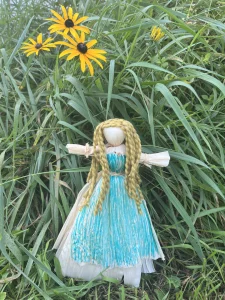
A corn husk doll made by Jean
And finally, we will sing a closing song. This song is called, He’s Got the Whole World in His Hands
Part of the Mysteries is learning sacred geometry and math. Did you know that all the numbers in the world can be made from the numbers 0,1,2,3,4,5,6,7,8, and 9? And if we give one of those numbers to each of our fingers, it shows us that right on our hands! (Count the numbers on my fingers.) So God is showing us his language for understanding the world on our very hands in front of us! And then again on our feet, which again demonstrates the principle of “as above so below”. When you begin to learn all of these things, the patterns become so clear and abundant that you realize that they could not possibly have happened by random chance!
So now, let’s sing the song…
He’s got the whole world in his hands. He’s got the whole world in his hands. He’s got the whole world in his hands. He’s got the whole world in his hands.
He’s got the wind and the rain in his hands. He’s got the wind and the rain in his hands He’s got the wind and the rain in his hands He’s got the whole world in his hands.
He’s got the little tiny baby in his hands. He’s got the little tiny baby in his hands. . He’s got the little tiny baby in his hands. . He’s got the whole world in his hands.
He’s got you and me, brother, in his hands. He’s got you and me, brother, in his hands. He’s got you and me, brother, in his hands. He’s got the whole world in his hands.
Thank you to Garden Juju Collective for inviting me, and thank you all so much for coming to my presentation! I look forward to seeing you again soon at the Sanctuary!
Share this article
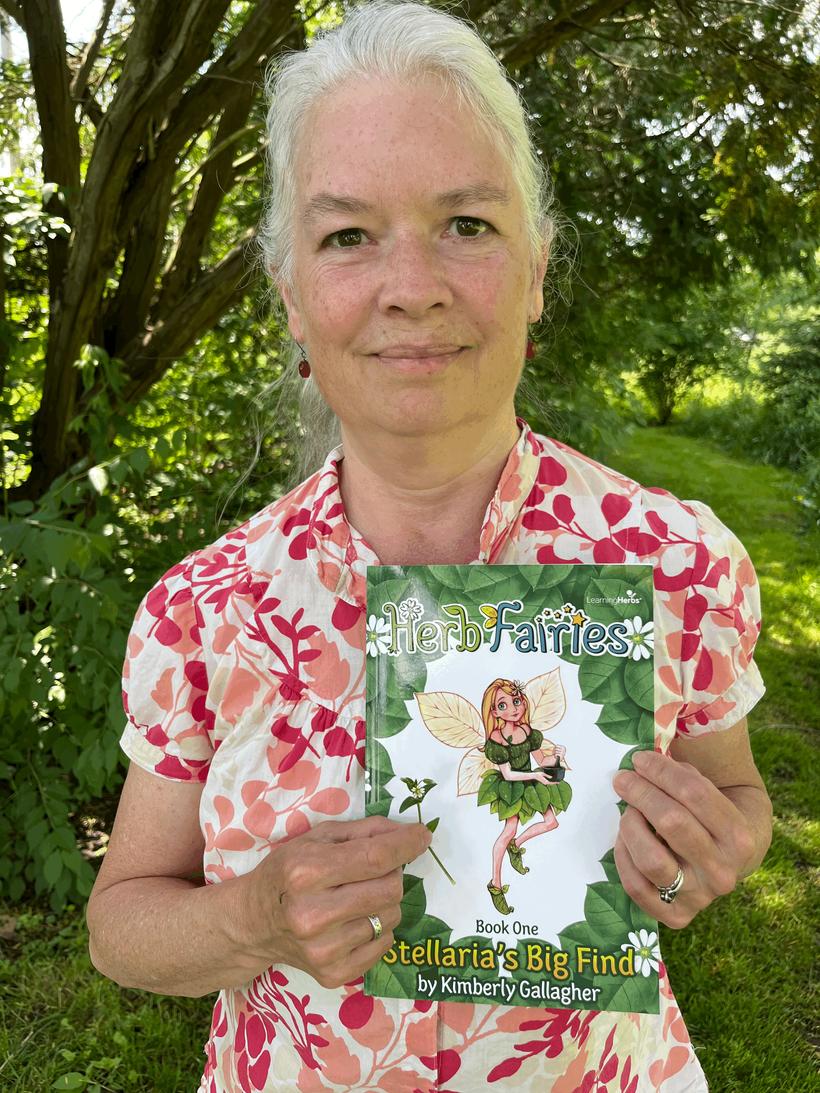
Written by : Jean Cavanaugh
Jean Cavanaugh is the founder and steward of Crossing Hedgerows Sanctuary, established in 2019 as a living, learning community devoted to reconnecting people with the wisdom of nature, the sacred order of creation, and the presence of Christ within all life. Her work brings together spiritual formation, ecological stewardship, ancestral wisdom, and hands-on community practice.
Through years of practical work on the land, study of the Mysteries, and the healing of her own severe health challenges through natural methods, Jean has come to recognize God’s hand at work throughout creation. Her teachings, rooted in the Mystery School tradition and Christian gnosis, explore how the patterns of heaven, earth, and the human body reveal the way back to divine presence, peace, and inner strength.
Jean leads with honesty, integrity, and a deeply welcoming spirit, inviting others to let go of inherited assumptions and rediscover truth through lived experience and embodied understanding. She works with all ages—from preschoolers to elders—offering programs and celebrations that emphasize direct engagement with nature, music, story, homesteading skills, and in-person community.
She and her family live at the 21-acre Crossing Hedgerows Sanctuary, where daily life reflects a commitment to simplicity, beauty, and harmony with the land. The sanctuary includes gardens, woodland trails, a seasonal creek, gathering circles, and spaces designed to nourish both people and wildlife. Jean is especially passionate about creating environments that are grounding, beautiful, and spiritually restorative.
Through her writing and teaching, Jean encourages others to know themselves, know creation, and recognize Christ as the living truth present within and around us—always inviting a return to love, beauty, and the sacred order of life.